
Straightforward clear, $150–$300
A blockage in the pan or its bend, cleared in one visit during business hours. Most single-toilet blockages sit here.
A dead toilet reorganises a household within the hour. Our Killara crews clear blockages the same day, drop sheets down, mess contained, and when a toilet keeps re-blocking, the camera goes down the line to end the cycle instead of renting it back to you monthly.
One-off blockages are usually about what went down: wipes sold as flushable that are not, sanitary items, a toy launched by a toddler. Those clear quickly with the right tools and stay cleared. The plunger-and-hope approach fails when the blockage is compacted further down the pan’s S-bend than a plunger can push, and forcing it usually just packs it tighter.
A toilet that blocks every few weeks is a different animal, that is almost never about the toilet. It is a symptom further down the line: tree roots in the sewer, a bellied pipe holding waste, or scale narrowing an older clay drain. Common around Killara, where mature gardens sit over original earthenware sewers. That is when the CCTV camera goes down, because clearing the symptom monthly is more expensive than fixing the cause once.

Rural and semi-rural properties frequently have drainage that predates any record, altered over decades by owners who did the work themselves.
Killara sits in leafy Ku-ring-gai on Sydney’s Upper North Shore (postcode 2071), a heritage suburb of grand Federation homes on large blocks between Lindfield and Gordon on the North Shore rail line. With mature trees lining nearly every street and older clay pipework beneath them, local drains see plenty, and we know the ground here well.
A camera with a sonde and a locator above ground maps the actual route and depth, which is worth having on file well before an emergency. Knowing where the line runs is also what stops the next shed slab or driveway being poured over an access point.
Many grand Federation homes still run original earthenware drains that crack and shift with age, letting roots and debris in.
In a Federation or interwar home the drainage is frequently the last original system still in service. Kitchens and bathrooms have been redone two or three times; the pipe under the house has not been touched since it was laid.
That pipe is not necessarily failing. But it was designed around a household using a fraction of today's water, and its joints have had a century of ground movement to work loose.
Old is not the same as beyond help. Clay is rigid, round and predictable, which makes it the ideal host for a relining: a resin sleeve cured inside the existing pipe, sealing every joint in the run without digging up the yard.
It is not always the right answer. A collapsed section, a badly sagging run or a line with the wrong fall needs excavation, and we will say so. But where the barrel is sound and the joints are the problem, relining ends a decade of recurring blockages in a day.
Killara’s towering established trees and lush gardens push roots straight into old pipe joints, the number-one cause of recurring blockages here.
The tree is rarely the villain, and removing it is rarely the answer, a mature tree is worth more to the property than the drain repair costs, and the roots already in the line do not vanish when the trunk goes.
What helps: knowing where your line runs so future planting goes elsewhere, and sealing the joints that are already open. If the tree is on council land or a neighbour's property, the repair is still yours, but the camera footage is what any conversation with them needs to start from.
On a property with an on-site system, a toilet that drains slowly across the whole house is often not a blockage at all, it is the tank or the disposal field backing up into the line.
The tells are wet ground over the trench in dry weather and smell outside rather than in. If that is what you have, stop adding water to the system and call. Continuing to load a failed field turns a pump-out into an excavation.
Older properties often have drainage that has been added to rather than redesigned, a 1950s bathroom teed into a 1920s line, a laundry connected when it was built in the sixties, junctions in places no plan records.
Decades-old sewer runs beneath large heritage properties sag and collapse over time, needing a camera and the right fix to sort properly.
That history is why a camera matters more on an old home than a new one. Half the blockages we clear in heritage-era properties sit at a junction that nobody, including the owner, knew was there.
A blockage in the pan or its bend, cleared in one visit during business hours. Most single-toilet blockages sit here.
A compacted or deeper blockage needing an electric eel or jetter time rather than hand tools.
The same jobs at night, on weekends or public holidays, once after-hours call-out and labour rates apply.
For repeat offenders: CCTV down the line to find the real cause. You see the footage, and any quote is built on it.
Running and leaking toilets are usually valves, washers and outlet seals, small parts, fixed same visit. A full new suite installed is quoted before anything is touched.
If it can safely wait for business hours, we say so on the phone, that one sentence is often worth $300. Figures here are indicative of the 2026 Sydney market rather than a quote from us, you get your own number as a fixed price before any work starts.

One toilet or every drain in the house? Overflowing now or just slow? That tells us the tools and the urgency, and you get a price picture before anyone drives.
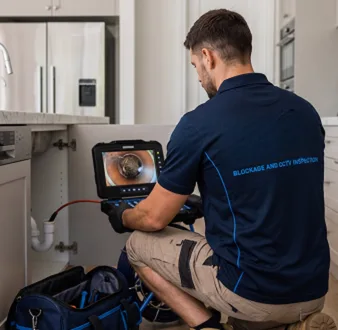
Drop sheets down first. Then the right tool for the blockage, closet auger for the pan, eel or jetter if it is sitting deeper in the line.
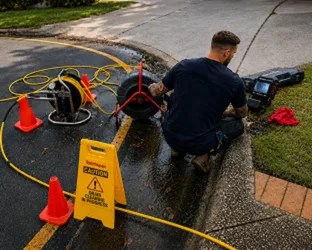
A first-time blockage with an obvious cause ends here. A repeat offender gets the camera, because the recurring ones are never about the toilet.

Roots cut and jetted, a damaged section relined, or a worn-out suite replaced: whatever the footage actually justifies, priced fixed before it starts.
That is emergency-grade in our book, whatever the clock says. The phone answers 24/7.
Cleared today, the cause named, a fixed price first: and the bathroom cleaner than we found it.

Leave your details and our local Killara team will call you back fast.