
The common fixes: $150–$600
Elements, thermostats, thermocouples and valves: most cold showers end in this row.
Cold water at 6am feels terminal, but the autopsy usually finds a $40 part, not a dead system. We test before we talk replacements, carry the common failures on the van, and put Killara households back under hot showers the same day, saving the new-system quote for tanks that have honestly earned one.
The hot water trade has a thumb on the scale: a replacement invoices ten times a thermostat, and the customer is standing in cold water wanting it over. So "needs a new system" gets said a lot to people whose element died. The actual failure list is mundane and mostly cheap, elements and thermostats on electric tanks, thermocouples and pilots on gas, sensors and flow faults behind a continuous-flow unit’s error code.
Our order of operations in Killara never changes: instruments first. Elements get metered, gas sequences get checked, codes get read. When the verdict is a part, you get the part today. When a cylinder is genuinely finished, weeping seams, hot-side rust, double-digit age meeting a big repair: you get the repair quote and the replacement quote side by side with our reasoning, and the choice stays where it belongs: with you.

Killara sits in leafy Ku-ring-gai on Sydney’s Upper North Shore (postcode 2071), a heritage suburb of grand Federation homes on large blocks between Lindfield and Gordon on the North Shore rail line. With mature trees lining nearly every street and older clay pipework beneath them, local drains see plenty, and we know the ground here well.
Properties beyond the gas network are choosing between electric storage, a heat pump, solar thermal with a booster, or bottled LPG. Each has a genuinely different cost profile and none of them is obviously right for every household.
The deciding factors are usually roof orientation, how many people are in the house, and whether there is solar generation to soak up. We will work through it with your actual numbers rather than a default recommendation.
Capacity complaints are usually a sizing problem rather than a fault: two showers at once, or a bath while the dishwasher runs, exceeding what the unit was specified to deliver. Worth diagnosing before replacing anything.
A period home has almost never got its original hot water arrangement. What it has is whatever was fitted at the last renovation, connected into pipework of a completely different era, and that junction is frequently where problems start.
Galvanised pipe feeding a modern unit will keep delivering rust and restricting flow regardless of how new the heater is. Replacing the unit without addressing the feed solves less than people expect.
Rainwater is soft and often slightly acidic, which is easier on a cylinder than hard water in some respects and harder on the anode in others. Sediment carried from a tank is the bigger issue, it settles in the bottom of a storage unit and insulates the element.
On tank supply, flushing the hot water unit annually matters more than it does on mains, and a properly maintained filter upstream extends the life of everything after it.
NSW and federal energy programs have at various times covered a substantial share of a heat pump upgrade, particularly when replacing electric storage. The schemes change, the eligibility rules change, and installers are not always current on either.
We will tell you what applies at the time you ask rather than quote a figure from last year. It is occasionally the difference between a repair and an upgrade making sense.
No hot water is listed among urgent repairs under NSW residential tenancy law. The landlord or agent must arrange it promptly, and your first call is to them.
If they cannot be reached, tenants can arrange urgent repairs up to a legislated limit and seek reimbursement. Keep the invoice and a record of your attempts to contact them, we itemise ours with times so it holds up.
A tank that no longer lasts the morning is usually not broken. Sediment builds in the base and insulates the element, so less of the cylinder is genuinely being heated, and the element works harder for a smaller result.
Flushing the tank restores much of it. If flushing does not, the household has grown or the habits have changed, and the honest answer is that the tank is now undersized rather than faulty.
Inside every storage cylinder is a sacrificial anode that corrodes so the steel does not. When it is consumed, the tank starts consuming itself, and that is the point of no return.
Replacing an anode costs a fraction of replacing a tank and roughly doubles its service life. Almost nobody does it, because almost nobody is told it exists, which is why it is here rather than in the fine print.
Elements, thermostats, thermocouples and valves: most cold showers end in this row.
Gas valves and continuous-flow boards, worth doing on systems young enough to repay it.
Installed like-for-like. Gas storage: $1,200–$2,200 installed.
Installed. Hot water that never runs out, and no cylinder left to rust.
The cheapest to run by a wide margin: deserves a look at every replacement decision.
Repair or replace, you get both numbers side by side and the price is fixed before work starts. Figures here are indicative of the 2026 Sydney market rather than a quote from us, you get your own number as a fixed price before any work starts.

System type, rough age, what it is (not) doing: enough to load the likely part before the van leaves, which is what makes same-day real.
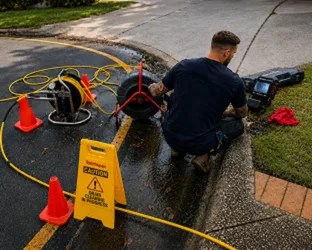
Elements metered, gas sequences traced, codes decoded. Diagnosis is a measurement, not a sales opportunity.
A live part gets fitted then and there. A dying tank gets you both prices, the reasoning, and zero pressure.
Repairs run same-visit; standard replacements called in early usually shower hot the same evening, installed to spec, old unit gone.
Call before 10am and in most cases the water is hot again tonight. Describe the system and we bring the likely fix on the van.
Everything Killara asks us about tanks, units and cold mornings.

Diagnosis first, honest numbers second, hot water third: usually all on the same day.

Leave your details and our local Killara team will call you back fast.