
The simple locate: $200–$400
Short accessible runs: confirmed, pinpointed, marked without ceremony.
A leak you cannot see is still on the meter, still under the slab, still soaking the wall cavity. We find them with listening gear, thermal imaging and pressure testing, so the repair needs one small hole in the right place, not three big ones in guesses.
Every concealed leak makes three things: a sound, a temperature difference, and a pressure drop. The gear reads all three. Acoustic equipment listens for the specific frequency of water escaping under pressure and gets louder as we track along the line; thermal imaging paints the wet path through a wall or the warm plume of a leaking hot line under a slab; and isolating sections of pipework against a pressure gauge proves exactly which run is losing water and which is sound.
Cross-referenced, they put an X on the floor within centimetres. That precision is the entire point, the difference between lifting three tiles and re-tiling a bathroom. It matters double under Killara’s older homes, where pipes wander in ways no plan ever recorded, and the "obvious" place to dig is reliably wrong.


Killara sits in leafy Ku-ring-gai on Sydney’s Upper North Shore (postcode 2071), a heritage suburb of grand Federation homes on large blocks between Lindfield and Gordon on the North Shore rail line. With mature trees lining nearly every street and older clay pipework beneath them, local drains see plenty, and we know the ground here well.
On a large block the service run from the meter to the house can be very long, all of it your responsibility, crossing ground that vehicles drive over and trees grow beside.
A leak anywhere along it is invisible from the house and expensive to find by digging. Correlation between two points on the run narrows it to a few metres, which is the entire difference between one excavation and a trench.
Many grand Federation homes still run original earthenware drains that crack and shift with age, letting roots and debris in.
Older homes are a record of everyone who has worked on them. Original runs, a post-war bathroom teed in somewhere unexpected, a laundry added in the sixties, and nothing documented.
That is why detection on a heritage-era property starts by establishing where the pipes actually go. Tracing the layout is half the job and it is the half that prevents opening the wrong wall.
Killara’s elevated, sloping garden blocks send heavy-rain runoff surging through stormwater pits that choke on leaf litter and back up.
On sloping ground, water leaving a pipe travels along whatever path is easiest until something stops it. By the time it appears it can be metres from the failure, several properties away, and always further down.
So the damp patch is a starting point, not a destination. We work uphill from it with correlation equipment rather than digging where the evidence happens to be visible.
A persistent sewer smell around a property with no obvious source is worth investigating properly. It usually means either a dry or failed trap, or a break in a line venting where it should not.
A smoke test finds both quickly, introduce smoke into the system and watch where it emerges. It is unglamorous, cheap, and conclusive in a way that sniffing around is not.
On a property running tank water, a supply leak shows up as consumption rather than as water, a tank dropping faster than the household explains, or a pump cycling when nothing is being used.
A pump that starts periodically with every tap closed is the clearest leak indicator there is on a rural property, and it is worth acting on immediately. It means the system is losing pressure somewhere continuously.
Older houses have rising damp, failed flashings, blocked subfloor vents and perished mortar, all of which produce symptoms that look exactly like a leak.
Decades-old sewer runs beneath large heritage properties sag and collapse over time, needing a camera and the right fix to sort properly.
Establishing which one you have is worth doing before any pipe is repaired. A moisture profile that peaks at floor level and falls with height points at rising damp; one that peaks at a fixture or a pipe run points at plumbing.
Short accessible runs: confirmed, pinpointed, marked without ceremony.
First hour with the full kit, pressure isolation, thermal, acoustic, on a typical concealed leak.
Extended runs, awkward access and multi-leak eliminations, beyond hour one.
Deep slab lines and multi-storey tracing at the top of the Sydney range.
Quoted off exactly what detection found, repaired through the marked spot, same crew, same visit, one call-out.
Weigh it against the alternative: exploratory demolition starts at more than detection costs, and it starts in the wrong place. Figures here are indicative of the 2026 Sydney market rather than a quote from us, you get your own number as a fixed price before any work starts.

The meter test done properly, plus your bills. If the evidence says there is no supply leak to find, you hear exactly that, free of a detection invoice.
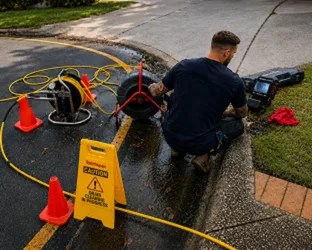
Isolating pipework section by section against a pressure gauge, hot versus cold, line by line, convicts one run and acquits the rest.

Acoustic tracking and thermal imaging walk the guilty run until the signals stack. The X on the floor is accurate to centimetres.

Access opens exactly at the mark; the failed section is repaired and pressure-tested. If the run's condition argues for a reroute instead, both numbers land first.
Then it is real, running, and billing you daily. Detection this week beats discovery through a ruined floor next month.
Non-invasive detection, evidence before quotes, and one crew for the find and the fix.

Leave your details and our local Killara team will call you back fast.